Identification technology
Industrial labels, RFID encoding, CIJ, TIJ, laser marking, dot peen, nameplates and direct part marking.
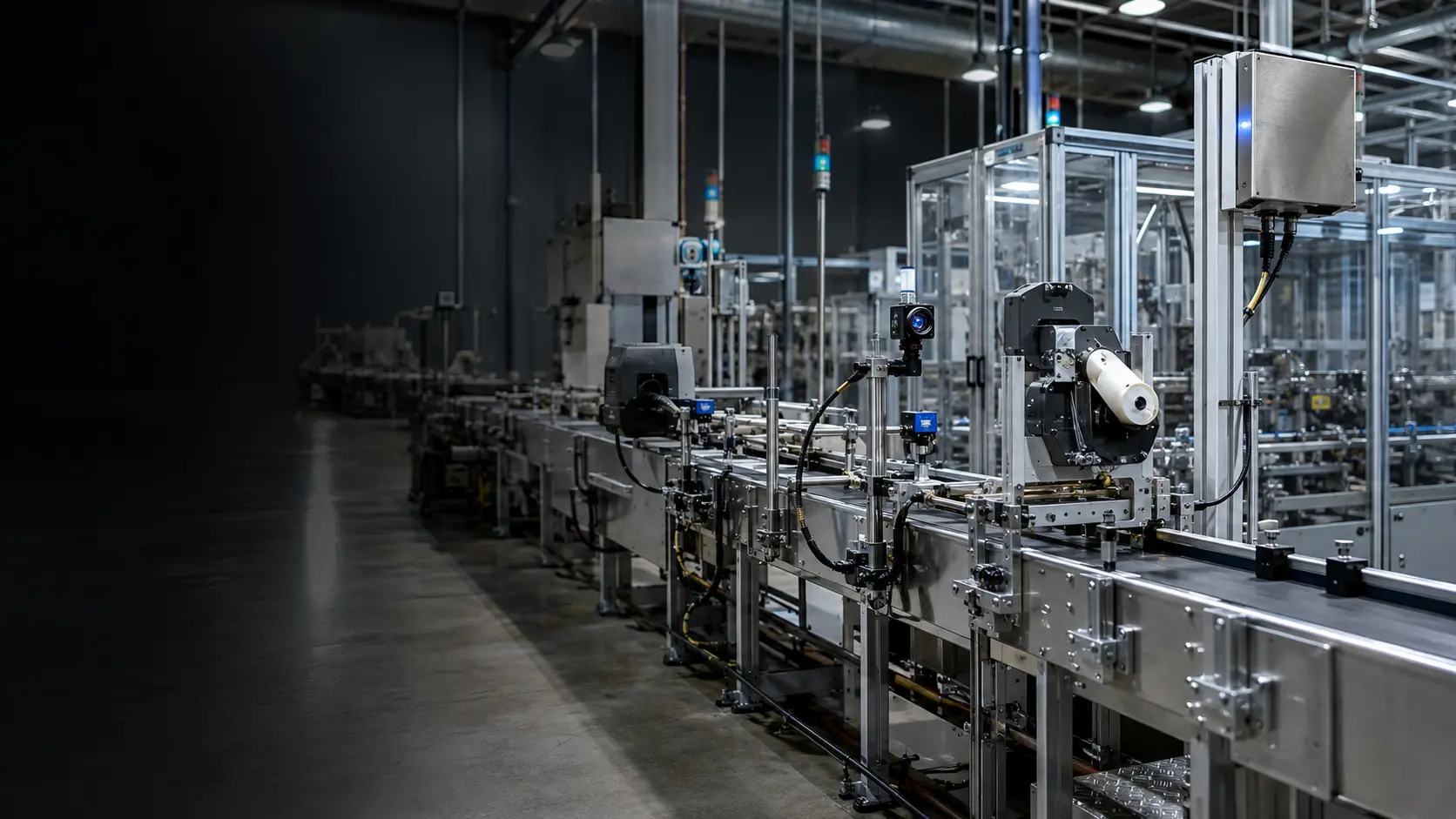
Bring marking, reading, verification, controls and data integration into one practical scope for UK manufacturing.
Oxford Traceability helps UK manufacturers create, read, verify and connect reliable product identities. The scope can begin with one coding or marking machine and extend to a connected traceability cell with scanners, vision, PLC controls and production-system interfaces.
We do not select technology from a catalogue alone. The product, material, code, speed, environment, handling, standards and data outcome are considered together, with representative trials used where real-world performance matters.
A dependable traceability process requires every hand-off to work, from data selection and physical marking to reading, decisions and retained evidence.
Industrial labels, RFID encoding, CIJ, TIJ, laser marking, dot peen, nameplates and direct part marking.
Barcode, Data Matrix, DPM and RFID reading, code-quality checks, presence inspection and result handling.
Fixtures, product presentation, guarding, reject handling, PLC signals and operator workflows.
Interfaces to agreed business systems, commissioning, training, consumables, service and future change planning.
The project method reduces risk by proving the most uncertain part early and keeping the final specification tied to real production conditions.
Capture product, code, standards, speed, environment, data, operators and abnormal production states.
Test actual components, packaging, labels, tags, inks or marks to establish reliable settings and constraints.
Develop equipment, fixtures, safety, controls, verification and system interfaces as one operating sequence.
Prove acceptance criteria, train users and establish ongoing consumables, maintenance and change control.
Oxford Traceability
Unit 5A, Jefferson Way
Thame, Oxfordshire OX9 3SZ
United Kingdom
Clear answers to the questions that usually shape the first technical discussion.
Oxford Traceability is based at Unit 5A, Jefferson Way, Thame, Oxfordshire OX9 3SZ and supports manufacturing projects across the United Kingdom.
Both. A project may cover one printer, reader or marking machine, or a connected cell combining identification, verification, controls and software interfaces.
Yes. Representative samples and production information are used to prove critical marking, printing, tag or reading assumptions before the final scope is agreed.
Share a sample, drawing, code specification or short production video and we will identify the most useful next step.