Barcode and Data Matrix verification
Confirm code content and print or mark quality, then connect pass, fail, reject and record handling to the production sequence.
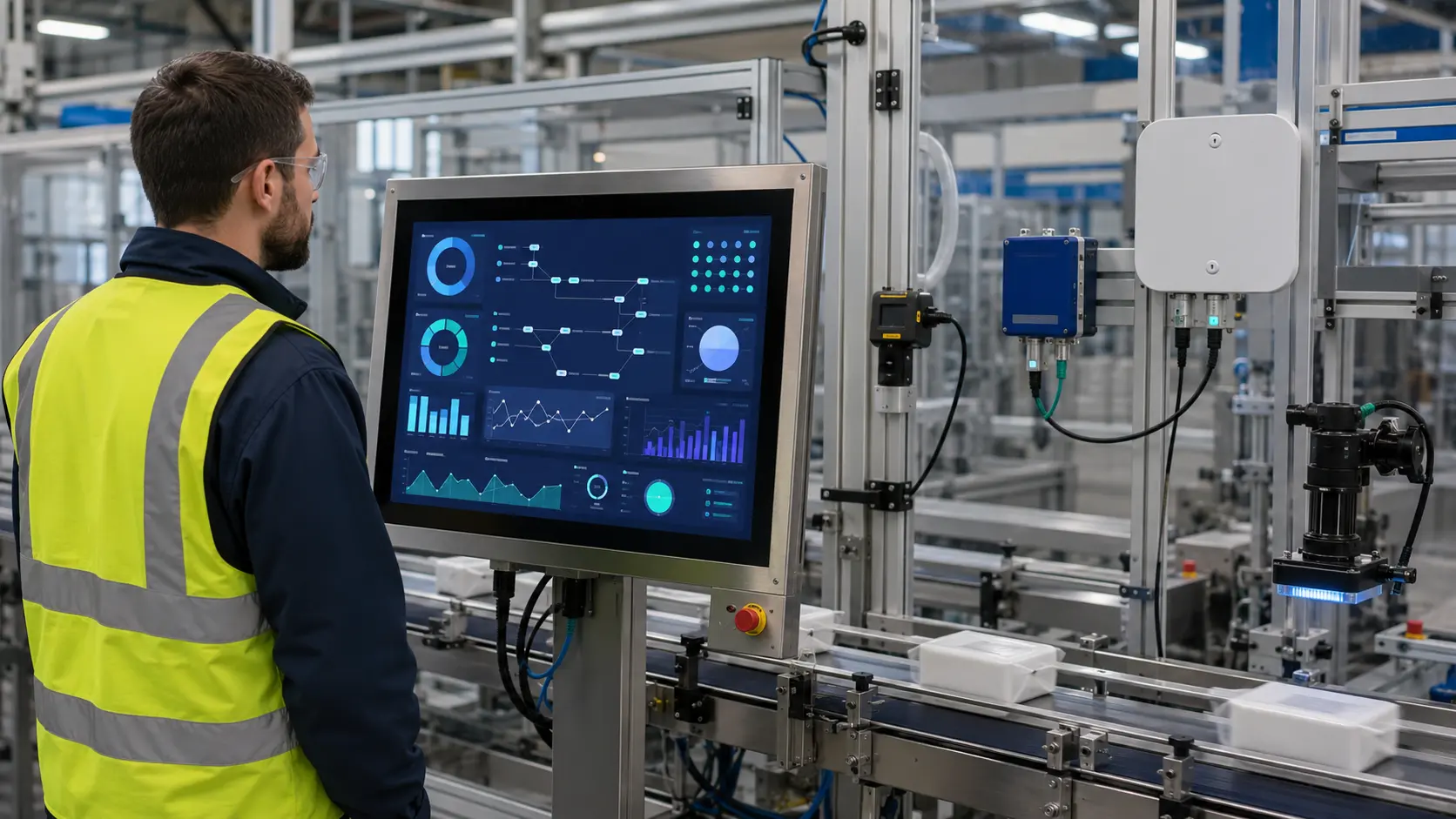
Connect the identity on the product with the process, quality and movement evidence your team needs to act.
Manufacturing traceability is most valuable when it is built around a clear decision: release or reject, route or hold, trace forward or backward, or prove which process was completed.
Oxford Traceability combines identification hardware, readers, verification, controls and system interfaces so those decisions are supported by reliable events from the production floor.
Each application has a distinct purpose, data model and success criterion. Select the operational problem first, then the technology.
Confirm code content and print or mark quality, then connect pass, fail, reject and record handling to the production sequence.
Give products or assemblies unique identities and relate material, component, operation, inspection and dispatch events to each serial.
Capture controlled read events without line of sight to support routing, status, asset control and proof of movement.
Create forward and backward links between incoming lots, production orders, finished batches and dispatch records.
The same evidence-led method applies whether the project starts with one workstation or a connected production line.
Agree what must be known, when it must be known and what the line should do when evidence is missing or wrong.
Select labels, marks, RFID tags, scanners, verifiers and read positions around the real product and environment.
Map orders, recipes, serials, batches, results, rework and exceptions between devices and software.
Test correct product, wrong product, unreadable code, duplicate identity, missed read, reject and recovery paths before release.
Clear answers to the questions that usually shape the first technical discussion.
It is a defined production use case in which identities and process events are captured to answer a specific operational question, such as which material lot entered a finished product or whether a code passed verification.
Often yes. Existing printers, scanners, PLCs, databases and business systems are assessed first so the project can retain supportable equipment and focus investment where it reduces risk.
Not always. A focused application can connect the critical devices and records first, then expand in controlled stages if broader production execution is required.
Describe the product, existing identification, process stages and evidence gap. We will help define a focused route forward.