10
Connect devices to decisionsIndustrial traceability software and system integration
Connect identification, reading, verification and production data into a practical traceability system built around your process.
Application-led specification
Designed around the process that must work.
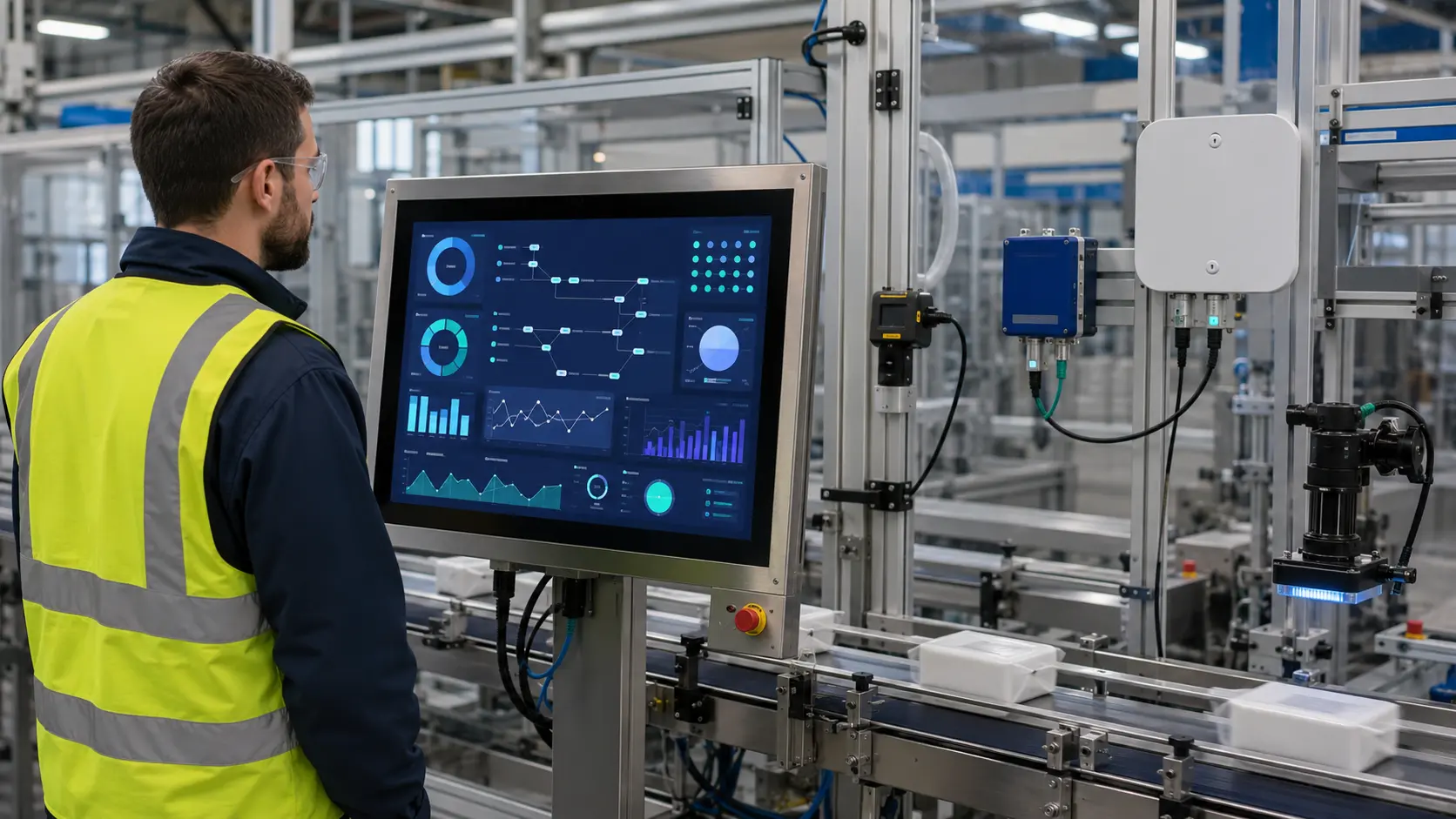
Traceability becomes valuable when identification events create reliable process records and useful decisions. We integrate printers, readers, scanners, cameras and markers with line controls and business systems while designing clear exception handling for production teams.
What this deliversA device-to-data solution shaped around real operators, exceptions and production priorities.
10 / Oxford TraceabilityCore capabilities
What the solution can include.
- 01Device, PLC, edge, database and API integration
- 02Serialisation, genealogy and work-in-progress tracking
- 03Recipe, label and marking-template control
- 04Verification, rejection, rework and audit records
Typical applications
Where it earns its place.
Component-to-assembly genealogy
Track-and-trace across production and logistics
Electronic build, inspection and dispatch records
A complete project scope
From feasibility to a supported production system.
The precise work package is shaped around the application. These are the four areas we normally resolve.
Process mapping and requirements definition
Establish the evidence needed to select and size the technology.
Interface and data-model design
Turn the proven application into a clear technical specification.
Device integration and user workflows
Engineer safe, maintainable presentation and production control.
Testing, deployment, training and lifecycle support
Connect, commission and prove the agreed operating sequence.
Build verification in
Identification should close the loop.
Where the process demands it, the system can check that the correct identity was created, confirm it is readable and associate the result with the production event.
- Presence and content checks
- Barcode, RFID or DPM read-back
- Reject, rework and exception handling
- Result and audit-record capture
Frequently asked questions
Traceability systems: practical questions.
Every application is different, but these answers cover useful starting points.
Can you integrate with an existing ERP or MES?+
Yes, subject to the interfaces available. Projects can exchange orders, product data, serials and results through APIs, databases, files or other agreed methods.
Do we need to replace our existing printers and scanners?+
Not necessarily. We first assess existing devices, protocols and supportability, then identify what can be retained and where change would reduce risk or complexity.
Can the system prevent the wrong label or mark being used?+
Yes. Recipe control, order validation, scanner checks, device feedback and line interlocks can be combined to reduce manual selection and catch mismatches.
Related production outcomes
Explore the application behind the equipment.
Discuss your application
Planning an industrial traceability project?
Share the product, material, speed, code requirement and the result you need. We’ll identify the right next step.
How should traceability connect to existing production systems?
Identify which system owns each identifier and production record, then define the data passed at each process step. Include communication failures, rework and manual corrections in the brief. Agree the required history and access to records so the solution supports the operational questions your team needs to answer.
- Ownership of identifiers and records
- Interfaces and communication failures
- Rework, corrections and history
Related guidance: Batch & lot traceability · About Oxford Traceability