Material receipt and issue
Identify supplier or internal lots and confirm the correct material is issued to the authorised production order.
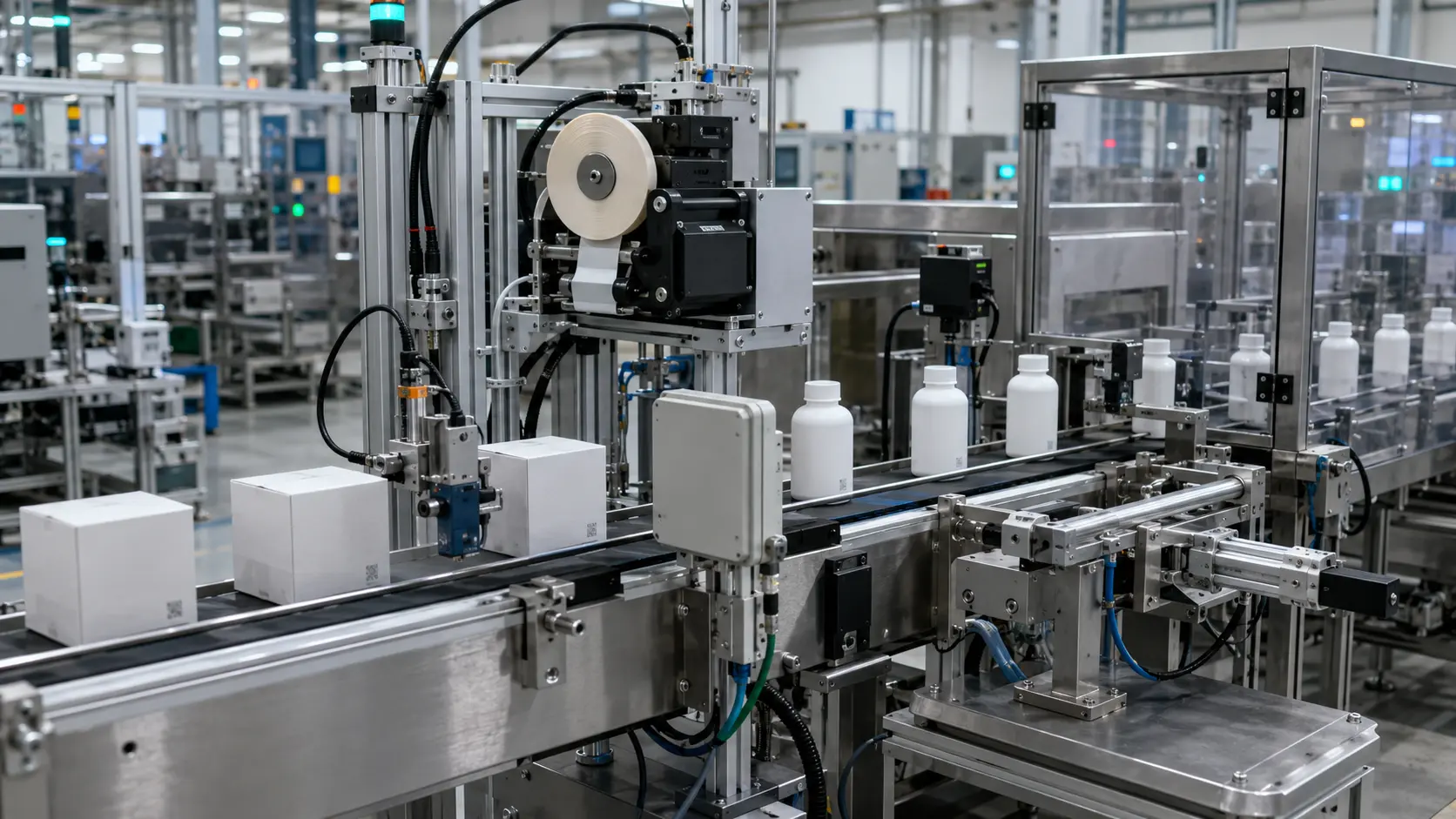
Connect incoming material lots with production consumption, finished batches, quality events and dispatch records so trace questions can be answered quickly.
Batch and lot traceability creates a controlled link from incoming materials through work in progress to finished goods and shipment. Forward tracing starts with a source lot and identifies affected output; backward tracing starts with a finished batch and identifies what went into it.
Oxford Traceability focuses on the physical identification and capture points that make those records dependable: labels, codes, scanners, RFID, line clearance, production confirmation and interfaces to the system of record.
The scope is selected around the production question, the evidence required and the response the operation must take.
Identify supplier or internal lots and confirm the correct material is issued to the authorised production order.
Record which lot was used, where, when and in what production batch or intermediate WIP stage.
Print, apply or mark batch, date and product data, then verify content and readability before release.
Relate finished batches to case, pallet, shipment or customer records through the agreed warehouse or business-system interface.
Trials and process mapping establish how normal production and exceptions should behave before the system is released.
Agree the materials, processes, transformations and dispatch points that must be included in forward and backward searches.
Specify labels, printers, scanners, RFID and verification around the real product, packaging and operator workflow.
Exchange material, batch, product and result data with the chosen database, ERP, MES, WMS or quality system.
Prove wrong lot, missed scan, split lot, rework, scrap, partial batch and recovery paths as well as normal production.
Clear answers to the questions that usually shape the first technical discussion.
Forward traceability starts with a material or component lot and finds every product or shipment it affected. Backward traceability starts with a finished batch and finds the source lots and production events behind it.
Often yes. The project may add controlled label, scanner, RFID or operator-confirmation points and connect them to existing PLC, ERP, MES, WMS or database interfaces.
Not necessarily. Oxford Traceability can focus on dependable shop-floor identification and event capture while the existing business or quality system remains the system of record.
Yes, where identities, recipes and production states are available. A scanner or RFID event can be checked against the active order and used to allow, warn, hold or interlock the process.
Share the product, code, process, line speed and data outcome. We will identify the right trials, technology and integration scope.
A useful traceability pilot should include material that leaves the normal production route and later returns as authorised rework. Choose an example finished batch and record the original input lots, the quantity diverted, its temporary identity and the batch into which it is subsequently introduced. The test should preserve the original history while making the later relationship clear.
Ask the system to answer two separate questions: which finished batches could contain a selected input lot, and which input lots contributed to a selected finished batch? Include split quantities, partially used containers and material recorded as scrap. Agree how quantity differences are investigated and how a correction is recorded without obscuring the original event. The required detail depends on the process and quality rules; it should be specified before hardware is selected.
Time the retrieval using records captured during the pilot rather than a manually prepared example report. Check whether production and quality staff can explain each link and identify any uncertainty. This gives a buyer concrete evidence of the proposed system's usefulness in a trace investigation, while exposing the physical scan, labelling or operator-confirmation points that still need improvement.
Rework can connect batches that otherwise appear unrelated. The pilot should show how the authorised relationship and its original history are retained.
No. The records must link relevant material consumption, production events and finished output within the agreed trace boundary.
Review manufacturing traceability systems Explore work-in-progress identification