Use case and data
Define what the 2D code must identify, which Application Identifiers are required and whether the code also needs a consumer web destination.
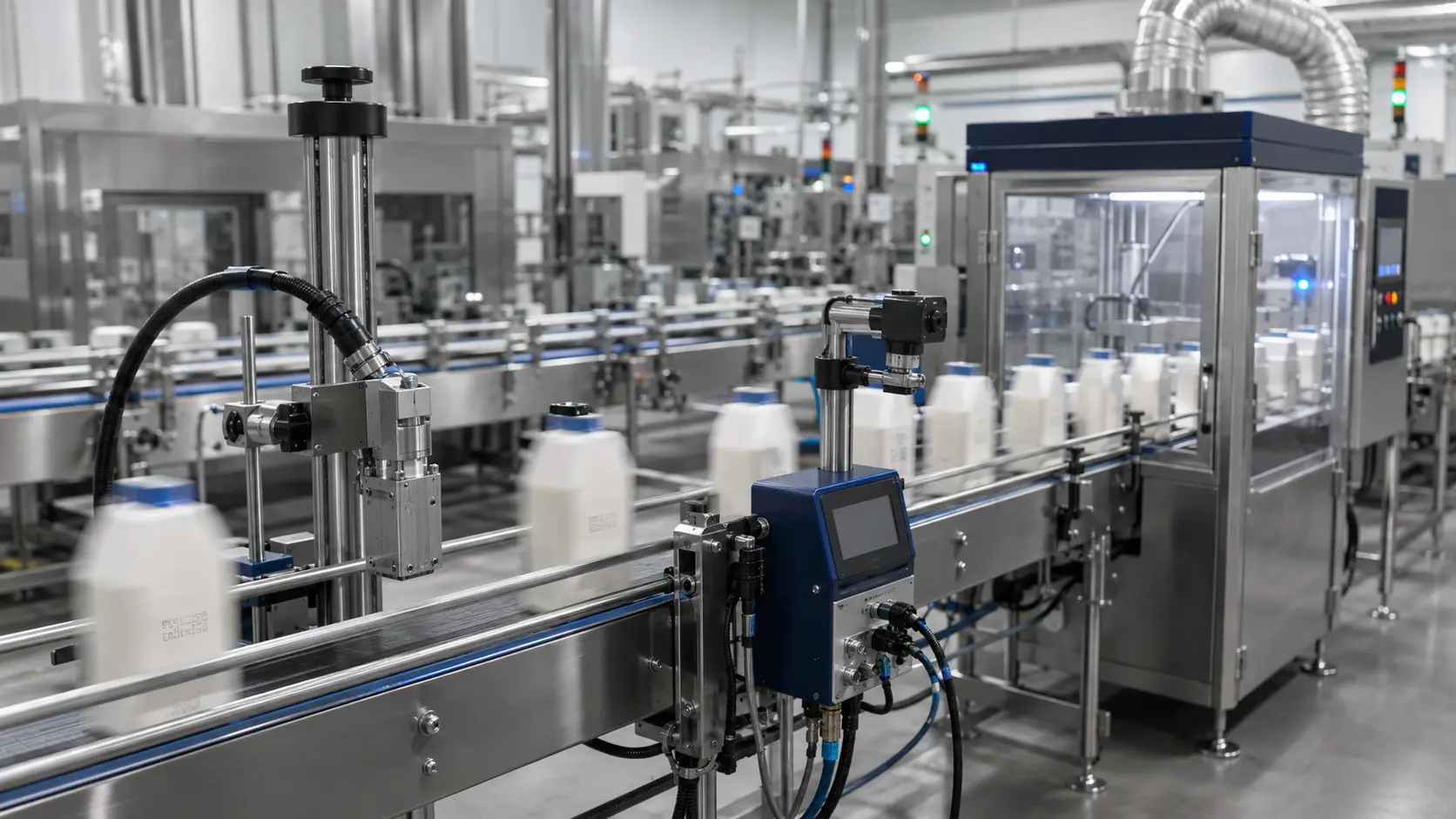
Prepare the data, printing, verification, scanning and production systems needed for the move towards next-generation retail barcodes.
GS1's Ambition 2027 is a global industry goal for retail point-of-sale systems to be capable of reading and processing a defined set of GS1 2D barcodes by the end of 2027. It is a capability target, not a switch-off date for every linear barcode.
For manufacturers, readiness spans more than choosing a symbol. Product data, artwork, printers or markers, verification, scanners, line software and trading-partner tests must work as one controlled process.
GS1 DataMatrix is compact and data-dense. It is widely used where space is limited and in industrial, electronics, automotive and healthcare applications. It can encode GS1 Application Identifiers such as GTIN, batch or lot, expiry and serial data.
QR Codes powered by GS1 use GS1 Digital Link URI syntax. They can support supply-chain identification while connecting a smartphone user to brand-controlled web information. That makes them especially relevant where one code must serve both operational and consumer-facing needs.
The correct route depends on the use case and trading-partner requirements. During the transition, a product may need both an existing linear symbol and a 2D code until the receiving environment is ready.
Authoritative references: GS1 UK 2D barcode guidance and GS1 Ambition 2027 explanation.
A successful pilot should test the complete path from product data and job selection to printing, grading, scanning, reject handling and downstream use.
Treat the programme as a connected production change, with responsibilities shared across data, packaging, engineering, quality and customers.
Define what the 2D code must identify, which Application Identifiers are required and whether the code also needs a consumer web destination.
Confirm code type, size, quiet zone, contrast, orientation and the effects of print variation, packaging curvature and artwork changes.
Prove that label, TIJ, CIJ, laser or other equipment can produce the required module size and quality at production speed.
Set the applicable verification method, acceptance threshold, sampling or 100% inspection approach and retained evidence.
Check image-based scanners, cameras, software parsers, PLCs and downstream systems with expected data and real production variation.
Plan coexistence with linear codes, controlled trials, customer approval, operator training and a safe rollback or recovery path.
The strongest programme proves technical capability and operational ownership before a high-volume rollout.
Confirm the GS1 identification requirement and expected retailer, logistics or consumer behaviour.
Use realistic GTIN, batch, expiry, serial and Digital Link structures rather than placeholder artwork.
Test the intended production technology, substrate, line speed, symbol location and downstream readers together.
Document settings, acceptance criteria, calibration, change control, operator checks and exception handling.
Clear answers to the questions that usually shape the first technical discussion.
No. The goal is for retail point-of-sale systems to be capable of processing defined GS1 2D barcodes by the end of 2027. GS1 expects a transition period in which existing linear barcodes and new 2D codes may coexist.
The choice depends on the approved use case, available space, supply-chain requirements and whether consumer web engagement is needed. Data Matrix is compact and widely used in industrial and healthcare settings; QR Codes are readily accessible to consumer smartphones.
Some existing equipment may be suitable, but the available resolution, module size, quiet zone, substrate, speed and data interface must be assessed and proven on the real pack or product.
A successful scan only proves one reader decoded the symbol under one set of conditions. Verification measures defined quality parameters and gives repeatable evidence against the applicable standard.
Share the product, code, process, line speed and data outcome. We will identify the right trials, technology and integration scope.