Food and beverage
Batch and date coding, GS1 barcodes, label verification, line clearance and forward/backward lot traceability across ingredients, packs, cases and pallets.
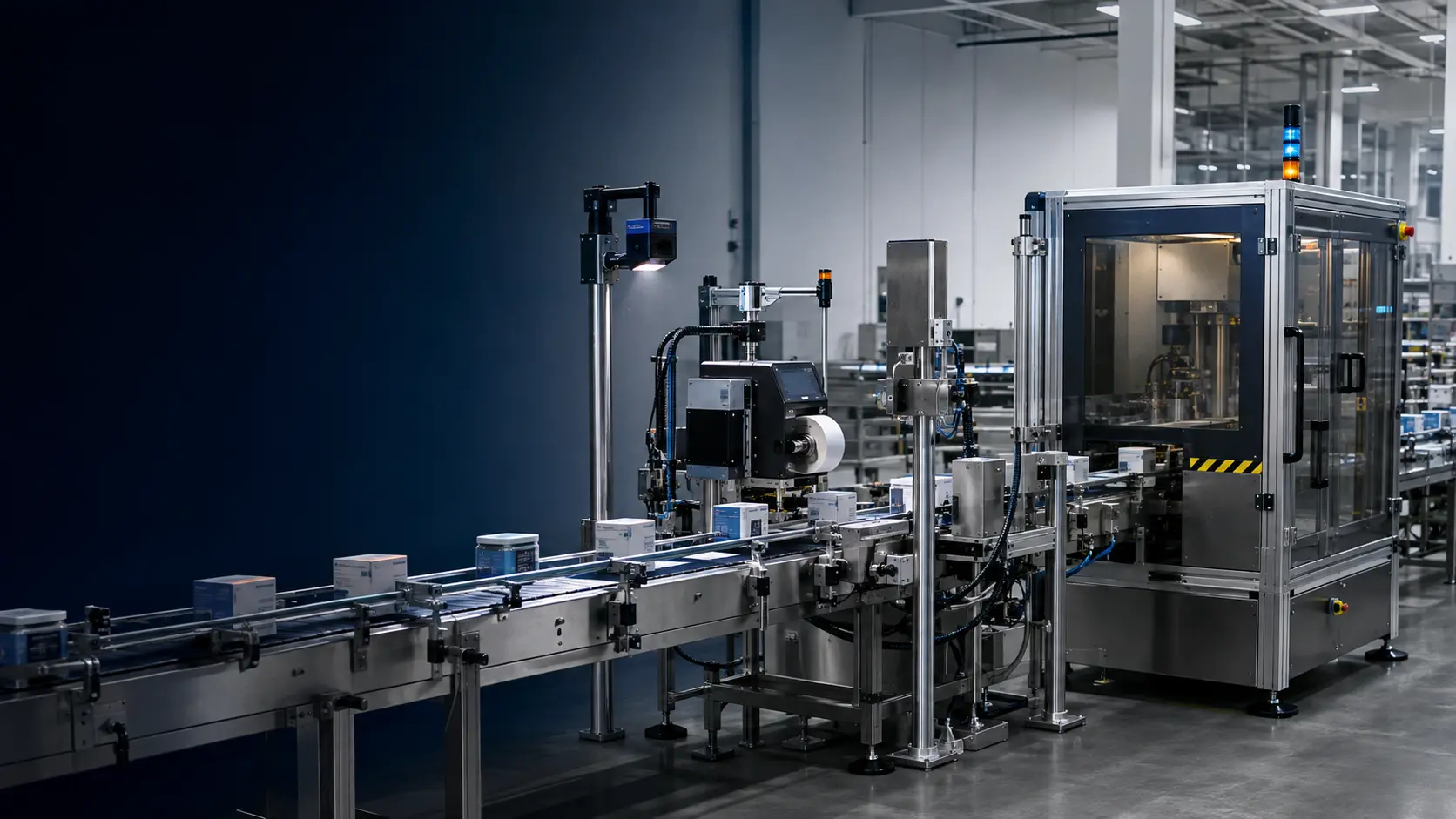
Match marking, reading, verification and production records to the standards, lifecycle and operating realities of your industry.
A food pack, aerospace component, medical device and returnable logistics asset may all require traceability, but the identity, environment, verification method and retained record are different.
Oxford Traceability begins with the product lifecycle and operational risk, then selects marking, reading, verification and data integration around the sector requirement.
These are useful starting points, not assumptions. The final scope is based on the exact standard, customer requirement and production process.
Batch and date coding, GS1 barcodes, label verification, line clearance and forward/backward lot traceability across ingredients, packs, cases and pallets.
Permanent serials and Data Matrix marks, component-to-assembly genealogy, supplier lot capture, error-proofing, rework history and customer-specific identification.
Durable component identity, controlled marking location, UID-style data, calibrated verification and searchable build, inspection and repair evidence.
UDI and serialised 2D identification, small-code quality, controlled label or mark data, verification records and integration with regulated workflows.
Compact Data Matrix identification, PCB and component tracking, feeder or station verification, serial genealogy and inspection result linkage.
Nameplates, asset tags, permanent part marks, job and route-card labels, tool tracking and production records matched to practical workshop conditions.
Pallet, tote and case identification, SSCC-style logistics labels, RFID portals, dispatch validation and links to WMS or ERP events.
Date, batch and variable-data coding, print-and-apply labels, 2D barcode readiness, inspection and reject control across primary and secondary packs.
We separate mandatory requirements from useful enhancements, then prove the highest-risk part before committing to the full system.
Identify customer specifications, standards, drawing notes, retention periods and quality-system expectations.
Define receipt, production, inspection, rework, packing, dispatch, service and end-of-life events that matter.
Trial code, label, RFID tag, mark and reader performance on representative products and environments.
Test pass, fail, duplicate, missed read, wrong product, reject, hold and recovery behaviour.
Clear answers to the questions that usually shape the first technical discussion.
Yes. Product material, code standards, environment, lifecycle, data retention and customer requirements vary widely. The same scanner or marker is not automatically suitable across sectors.
Yes. A manufacturer may trace incoming material by lot while assigning unique serial identities to finished products or safety-critical assemblies.
Yes. Projects can be developed around customer, GS1, UDI, UID or internal identification rules, subject to confirming the exact data and verification requirements.
Send the customer specification, drawing, code requirement or current traceability gap and we will help define the next technical step.