02
Read without line of sightIndustrial RFID readers and production infrastructure
Build dependable RFID read points using correctly selected readers, antennas, tags, shielding, controls and data connections.
Application-led specification
Designed around the process that must work.
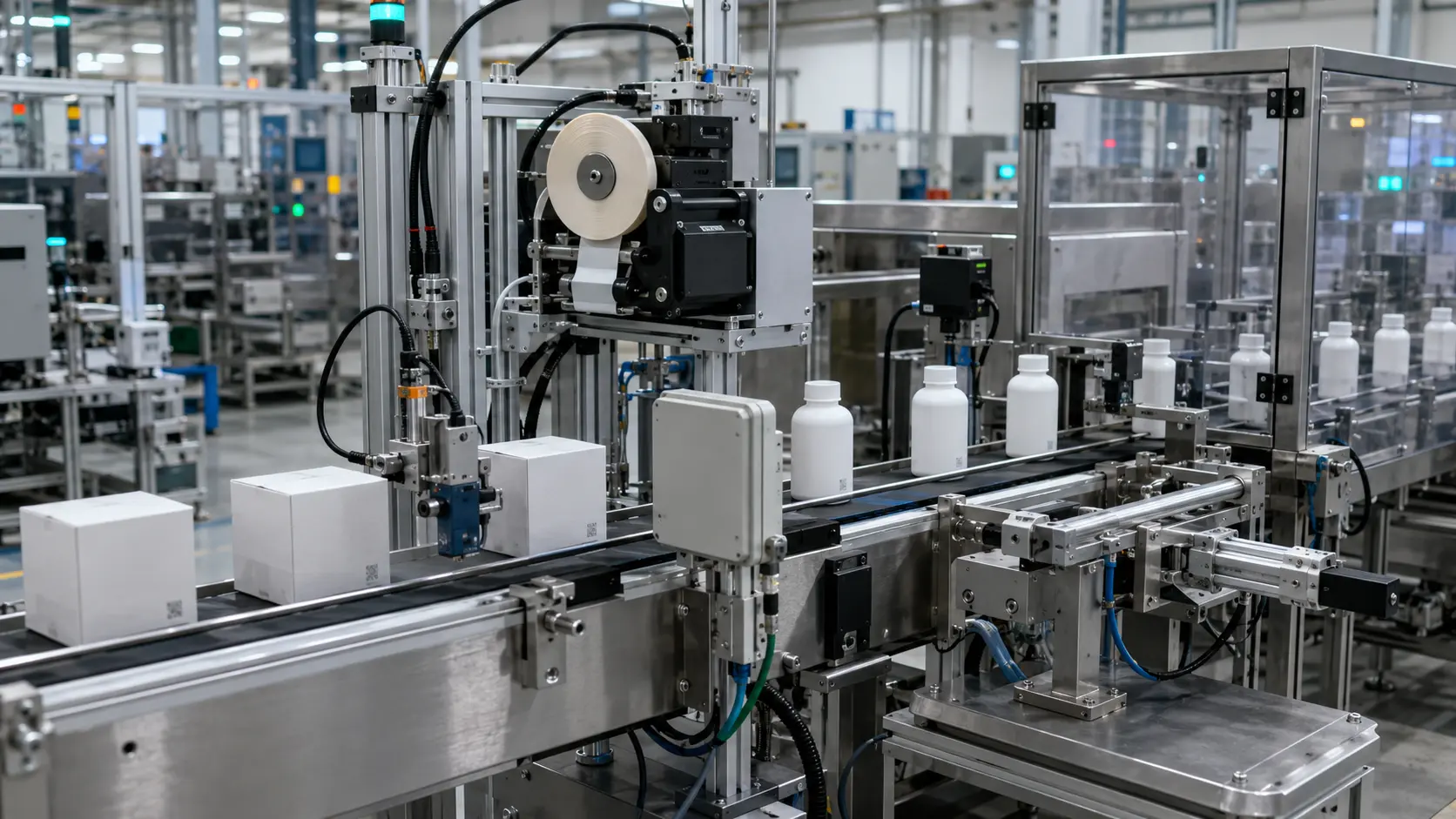
Reliable RFID depends on the whole read environment. We assess the tagged item, materials, read distance, line speed, orientation, surrounding metal and liquids before defining the reader, antenna layout and control logic.
What this deliversControlled read zones designed around the physics of your product and process.
02 / Oxford TraceabilityCore capabilities
What the solution can include.
- 01Fixed and handheld UHF, HF and application-led RFID reading
- 02Antenna arrays, portals, tunnels and workstation read points
- 03Tag selection and on-product read testing
- 04PLC, edge and enterprise-system connectivity
Typical applications
Where it earns its place.
Returnable asset and tool control
Pallet, tote and container identification
Automated material routing and proof of process
A complete project scope
From feasibility to a supported production system.
The precise work package is shaped around the application. These are the four areas we normally resolve.
Site and radio-environment survey
Establish the evidence needed to select and size the technology.
Tag and antenna trials
Turn the proven application into a clear technical specification.
Read-zone design and shielding strategy
Engineer safe, maintainable presentation and production control.
Commissioning, exception handling and data mapping
Connect, commission and prove the agreed operating sequence.
Build verification in
Identification should close the loop.
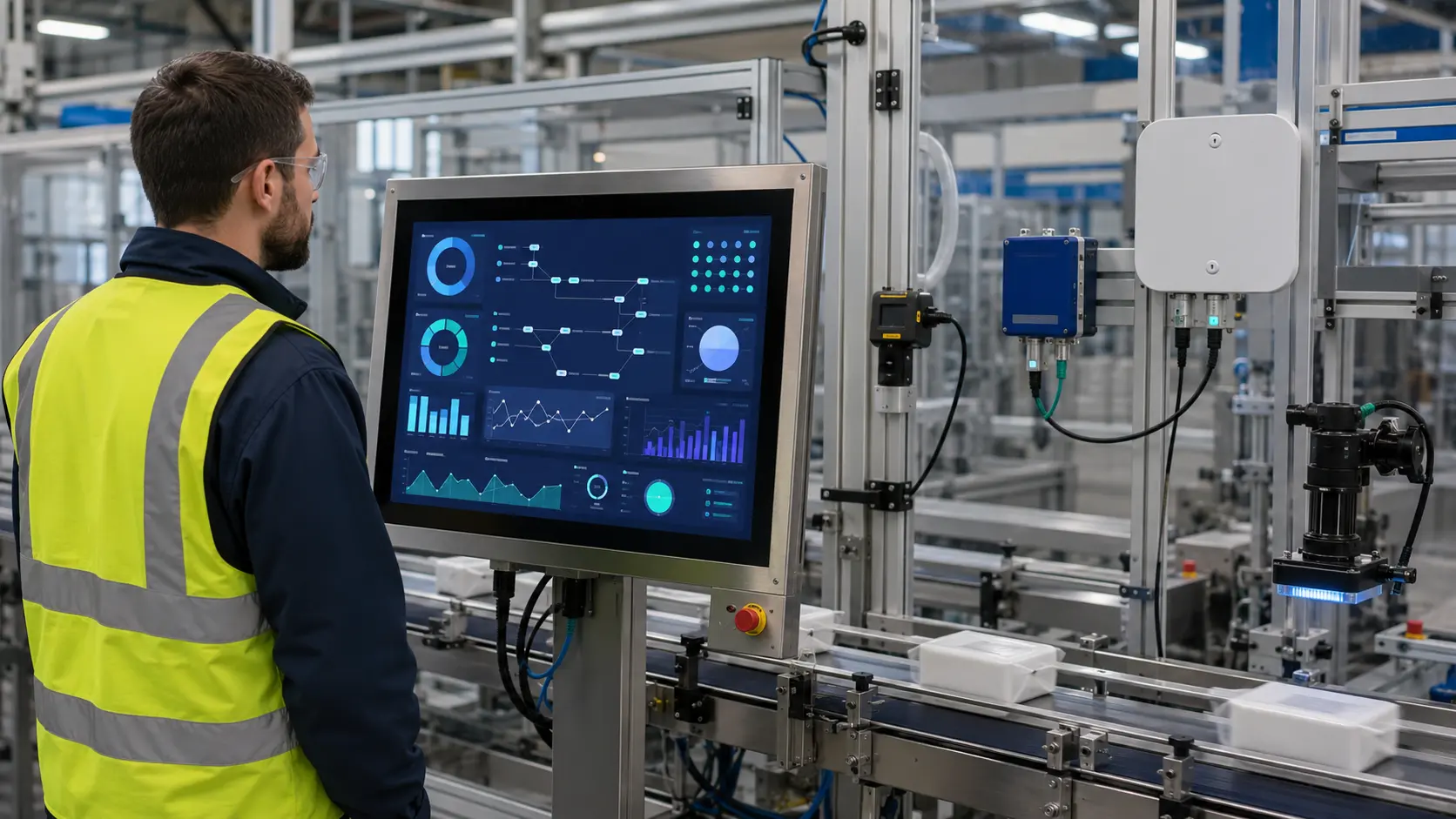
Where the process demands it, the system can check that the correct identity was created, confirm it is readable and associate the result with the production event.
- Presence and content checks
- Barcode, RFID or DPM read-back
- Reject, rework and exception handling
- Result and audit-record capture
Frequently asked questions
Industrial RFID readers: practical questions.
Every application is different, but these answers cover useful starting points.
Which RFID frequency is best for industrial tracking?+
It depends on read range, tag size, materials and process. UHF is common for longer-range logistics and production tracking, while HF may suit closer, more controlled reads. We select by application testing.
Can RFID work around metal or liquids?+
Often yes, but tag construction, spacing, orientation and antenna placement become critical. Trials on representative products are an important part of the design.
Can RFID readers trigger machinery or routing decisions?+
Yes. A reader event can be validated and passed to PLC, line-control, database, MES or other systems to support routing, interlocks and traceability records.
Related production outcomes
Explore the application behind the equipment.
Discuss your application
Planning an industrial RFID project?
Share the product, material, speed, code requirement and the result you need. We’ll identify the right next step.