Production routing
Confirm identity at a process entrance and provide the route, recipe or operating instruction associated with that WIP item.
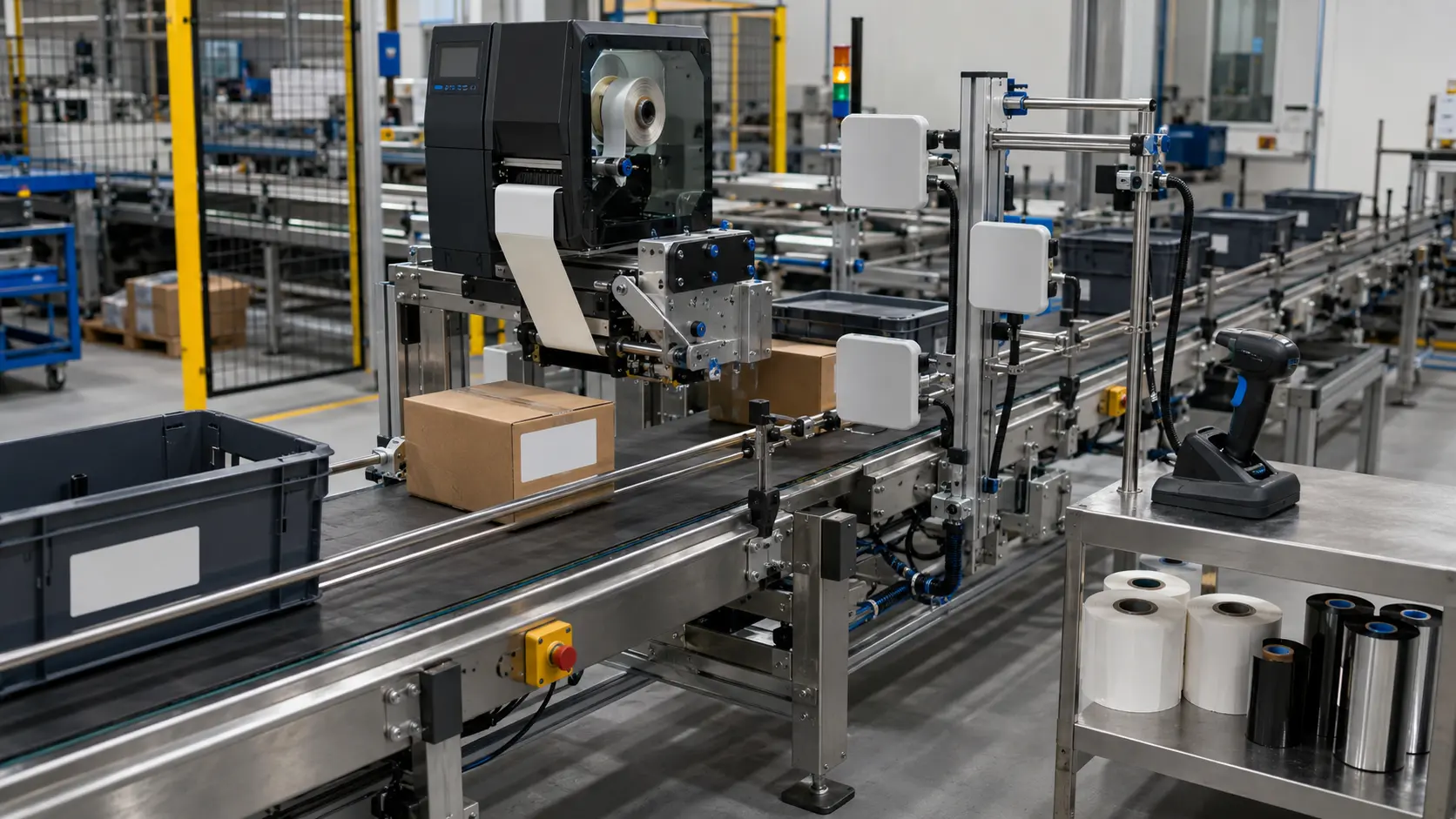
Capture controlled production movements, locations and process events using RFID read zones designed around the tagged item and factory environment.
RFID WIP tracking identifies products, carriers, tools or returnable assets as they move through production. Unlike a barcode, RFID may be read without direct line of sight and can support multiple tags, but reliable results depend on disciplined read-zone engineering.
Metal, liquids, tag orientation, reflections, adjacent lanes and uncontrolled reads can change performance. Oxford Traceability therefore develops the tag, antenna layout, reader settings, shielding, triggers and exception logic as one system.
The scope is selected around the production question, the evidence required and the response the operation must take.
Confirm identity at a process entrance and provide the route, recipe or operating instruction associated with that WIP item.
Record controlled movements between stores, lines, cells and hold areas so the latest confirmed event is visible.
Track totes, racks, fixtures, tools or containers, including cycle count, maintenance status and last known process point.
Associate the RFID identity with completion, machine, inspection or operator events where the wider system provides those results.
Trials and process mapping establish how normal production and exceptions should behave before the system is released.
Assess objects, materials, distances, adjacent processes and possible reflections before equipment selection.
Compare tag constructions and mounting positions on representative WIP, carriers or assets.
Position antennas, shielding, triggers and reader power to capture the intended event while avoiding cross-reads.
Handle missing, duplicate, unexpected and out-of-sequence reads without losing production control.
Clear answers to the questions that usually shape the first technical discussion.
Often yes, but tag type, spacing, orientation and antenna design become especially important. Representative trials are essential before final specification.
A fixed-reader system normally records the latest confirmed read-zone event rather than continuous centimetre-level location. More precise locating technologies may be considered where that outcome is genuinely required.
Yes. After the identity is validated, the event can be passed to a PLC or software layer to request the correct recipe, route or status action.
The system should define time windows, duplicate suppression, expected sequence, operator recovery and safe process behaviour for missed or unexpected reads.
Share the product, code, process, line speed and data outcome. We will identify the right trials, technology and integration scope.