05
Permanent precision markingFibre laser marking systems for metals and components
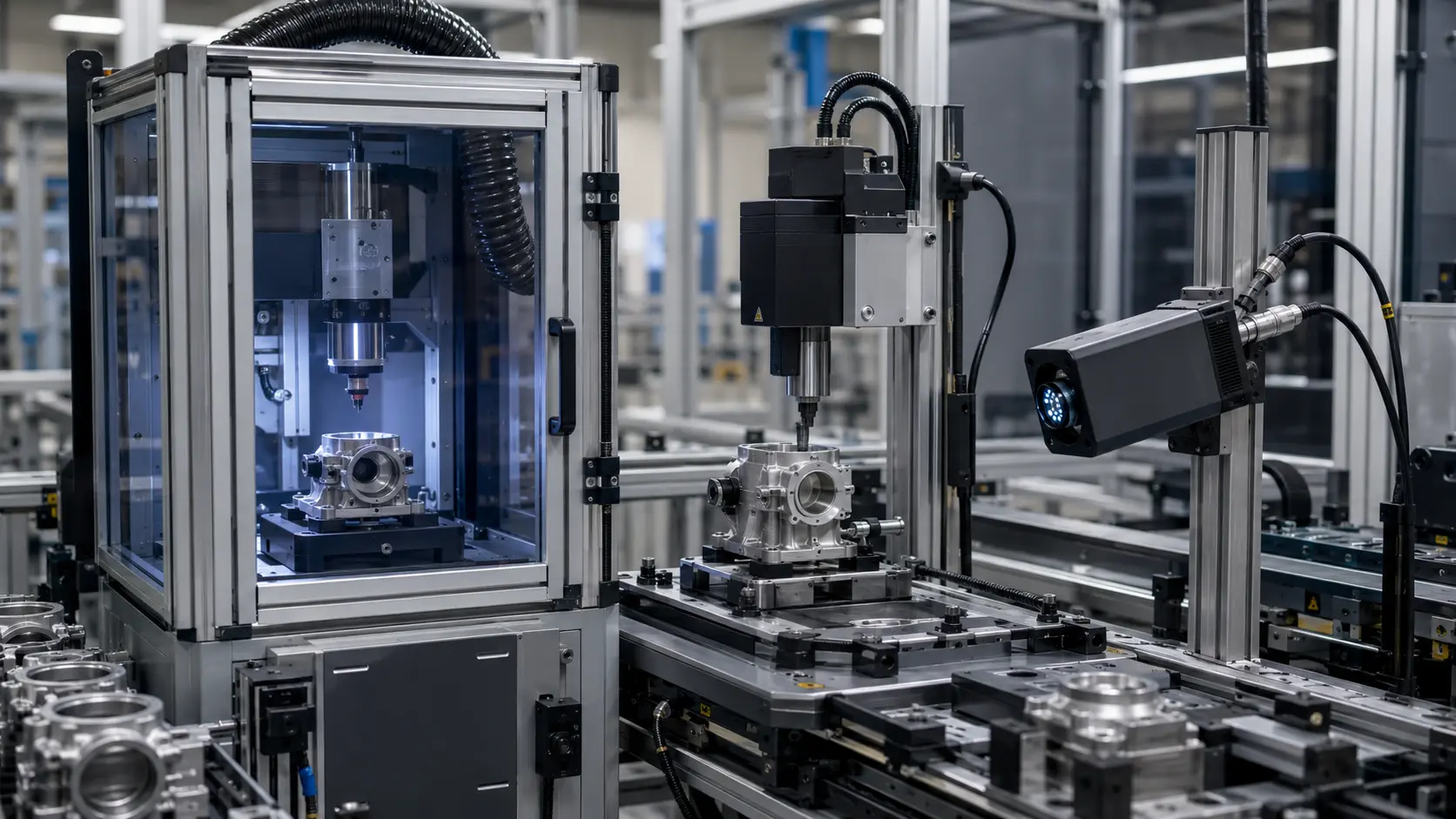
Create fast, permanent and precise marks on metals and selected engineering plastics with a correctly guarded fibre-laser cell.
Application-led specification
Designed around the process that must work.
Fibre laser is a strong route for permanent identification where fine detail, speed and low consumable use matter. We develop the marking process around material response, required contrast, code quality, handling and laser safety.
What this deliversA permanent mark developed alongside safe presentation, handling and verification.
05 / Oxford TraceabilityCore capabilities
What the solution can include.
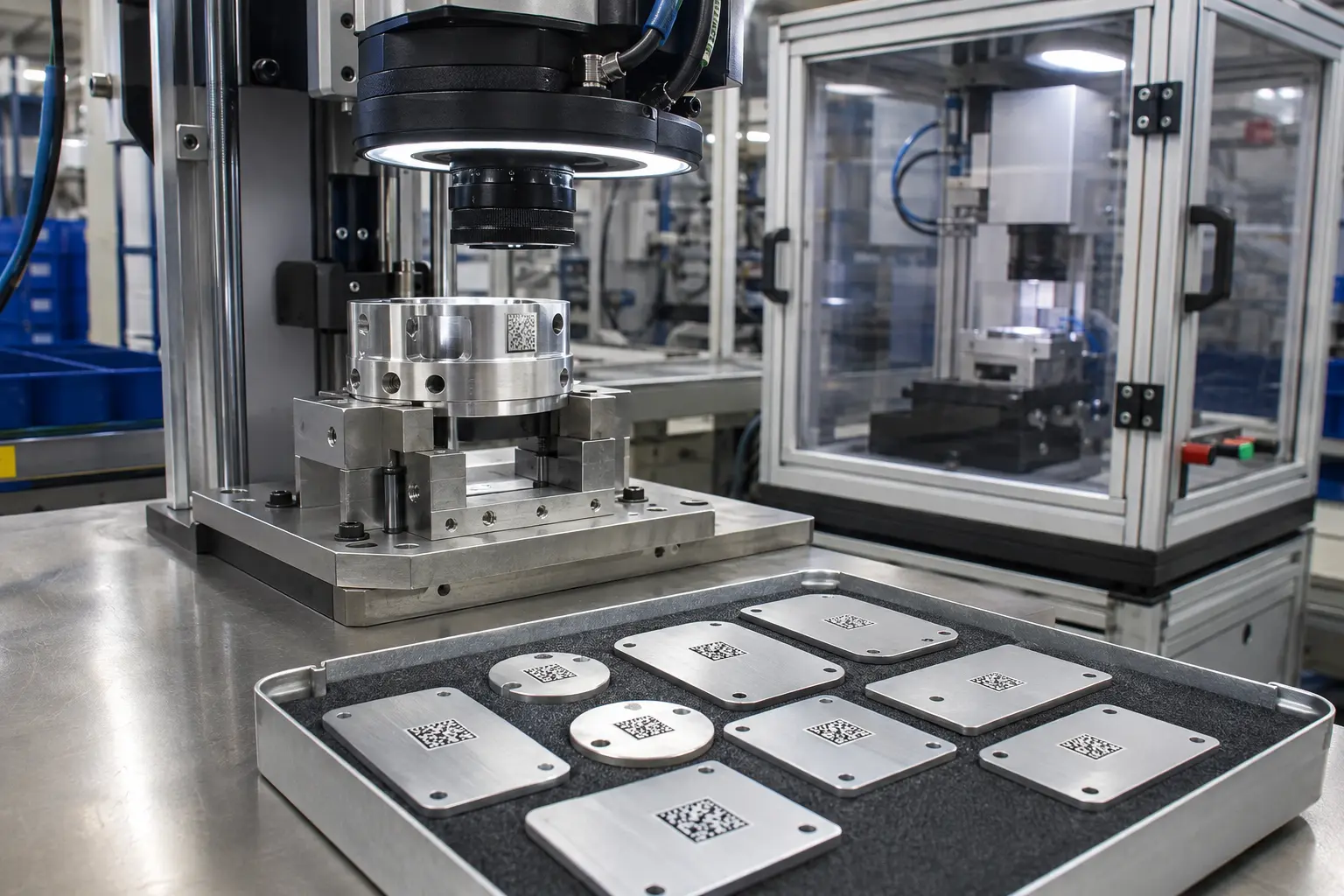
- 01Text, logos, serials, barcodes and Data Matrix marking
- 02Annealing, engraving, ablation and contrast marking trials
- 03Class 1 guarded workstations and automated cells
- 04Rotary, XY and robot-assisted part handling
Typical applications
Where it earns its place.
Tools, fasteners and machined parts
Automotive, aerospace and electronics identification
UID, UDI and internal serialisation projects
A complete project scope
From feasibility to a supported production system.
The precise work package is shaped around the application. These are the four areas we normally resolve.
Material and mark-quality trials
Establish the evidence needed to select and size the technology.
Laser source, lens and field-size selection
Turn the proven application into a clear technical specification.
Fixture, guarding and extraction design
Engineer safe, maintainable presentation and production control.
Data, verification and reject-control integration
Connect, commission and prove the agreed operating sequence.
Build verification in
Identification should close the loop.
Where the process demands it, the system can check that the correct identity was created, confirm it is readable and associate the result with the production event.
- Presence and content checks
- Barcode, RFID or DPM read-back
- Reject, rework and exception handling
- Result and audit-record capture
Frequently asked questions
Fibre laser marking: practical questions.
Every application is different, but these answers cover useful starting points.
What materials can a fibre laser mark?+
Fibre lasers are widely used for metals and can mark certain engineering plastics. The achievable appearance depends on material grade, finish, coatings and the chosen marking process.
Can fibre laser marks be verified automatically?+
Yes. A vision reader can check presence, content and, where required, grade a machine-readable code after marking.
Do you provide guarded laser cells?+
Yes. Projects can include a fully enclosed workstation or integrated cell with safety interlocks, extraction, fixtures and automated part handling.
Related production outcomes
Explore the application behind the equipment.
Discuss your application
Planning a fibre laser marking project?
Share the product, material, speed, code requirement and the result you need. We’ll identify the right next step.