Master data and templates
Control product identifiers, issuing-agency syntax, label layouts, human-readable content and approved versions.
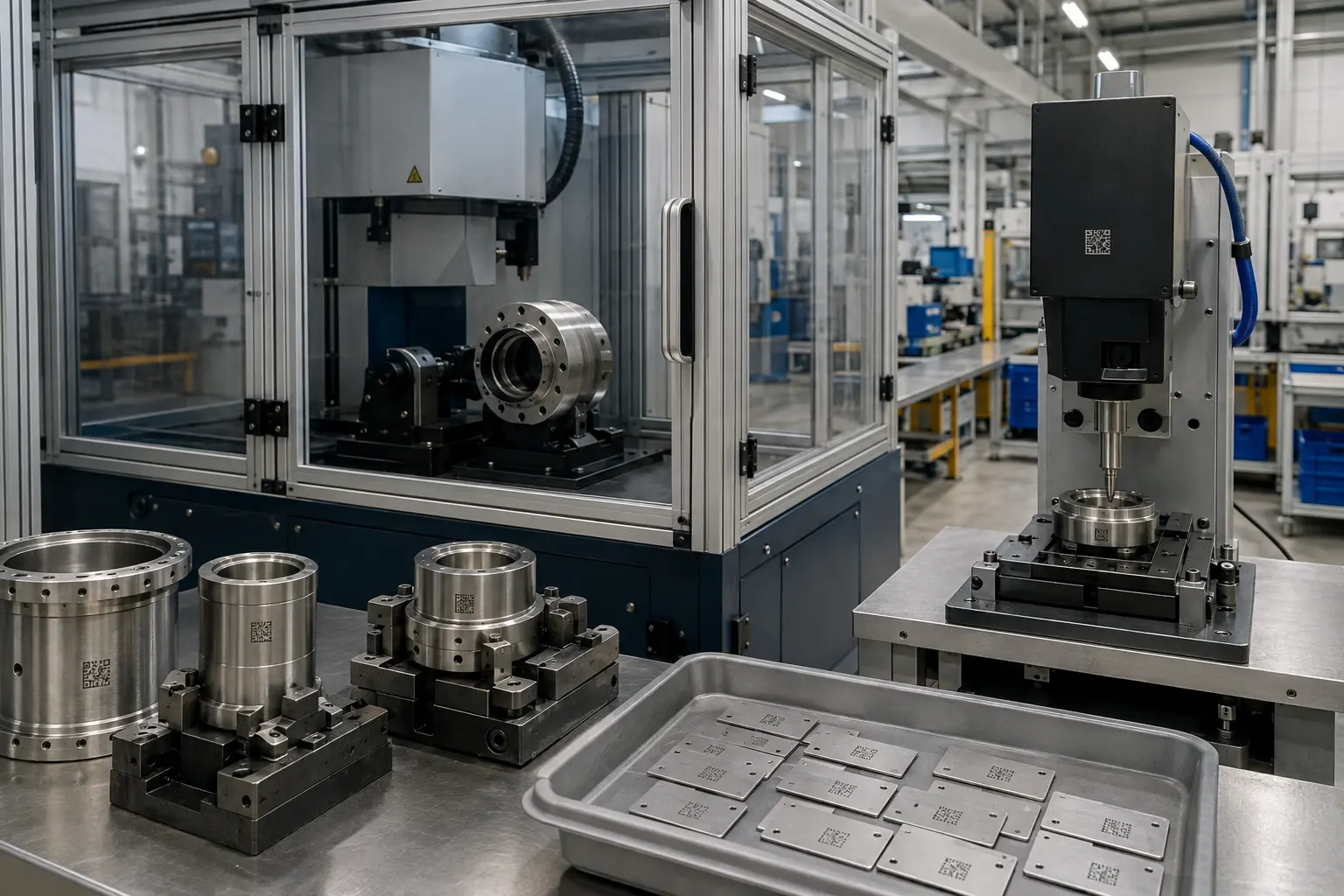
Create, apply, verify and retain medical-device identities across labels, packaging and direct part marking, with production controls built around the applicable market requirement.
A Unique Device Identifier normally contains a device identifier and production information such as lot, serial, manufacture or expiry data, represented in human-readable and machine-readable form according to the applicable rules and issuing system.
Oxford Traceability supports the production implementation: label printing, direct marking, code verification, serialisation, database or line integration and evidence that the intended identity was applied to the correct device or packaging level. Regulatory interpretation remains the manufacturer's responsibility and should be confirmed for each market.
The reliable system controls not only print quality but also template selection, variable data, product association and retained evidence.
Control product identifiers, issuing-agency syntax, label layouts, human-readable content and approved versions.
Select label, TIJ, laser or other marking technology around material, available space, durability and process validation.
Grade code quality where required, validate encoded content and confirm the correct identity at the production step.
Allocate or receive serials, prevent reuse, associate production events and retain searchable evidence for the required period.
The scope should distinguish regulatory data, customer specifications, code-quality criteria and manufacturing acceptance tests.
Identify the device, packaging levels, markets, issuing system, required dates and governing regulatory or customer documents.
Map identifier sources, variable UDI-PI fields, symbol, size, placement, human-readable content and permanence.
Test representative products through processing, handling or reprocessing conditions and confirm the verification method.
Test template control, serial handling, line clearance, read-back, reject, rework, audit trail and recovery states.
Requirements vary by product, market and customer specification. Confirm the current rules that apply to your project.
Practical answers to common buying and implementation questions.
The UDI-DI identifies the device model or version, while UDI-PI represents production information that may include lot, serial, manufacture date or expiry date as required for the device and market.
Potentially, using a suitable direct-part-marking method and placement. Material response, code size, surface finish, reprocessing exposure, readability and the applicable regulatory exceptions must be assessed.
No. Decoding confirms that a reader extracted data. Where a quality grade is required, a calibrated verifier and the applicable print or direct-mark verification method should be used.
Yes. A serialisation and genealogy layer can associate the issued identity with manufacturing order, components, process results, inspection, rework, release and packaging events.
Share the device, target market, packaging levels, proposed symbology, code size and current data source. We will help define the production technology and trial plan.